

Creativity as Protection: Why Youth Arts Matter on World Mental Health Day
This World Mental Health Day, the global theme is Lived experiences heard: real voices, real change. At National Youth Arts Wales, we see this every time a young person steps into a rehearsal room, a community hall or a cathedral and is taken seriously as an artist, and as a person.
Childhood in Wales
The need remains urgent. Public Health Wales’s 2026 Health Needs Assessment estimates 135,500 children and young people aged 8 to 25 in Wales have a diagnosable mental health condition (that’s about one in six aged 8–10, one in five aged 11–16, and one in four aged 17–24). Emotional difficulties such as anxiety have risen most sharply. Girls and young people from the most deprived communities are disproportionately affected.
A further Public Health Wales study, published this autumn, found that poor sleep, bullying, academic pressure, negative body image and a lack of support from teachers or friends are all linked to worse mental health and lower wellbeing. Young people themselves describe services that too often feel one-size-fits-all, particularly when mental health needs overlap with neurodivergence.
None of this will surprise the teachers, youth workers and parents we meet across Wales. What should cut through, this year, is the other finding in that same Health Needs Assessment: alongside early relationships, community connection and physical activity, opportunities for creativity are named as a protective factor.
The Evidence
A World Health Organization review of more than 3,000 studies found that arts participation (music, drama, dance, visual arts) reduces depression, anxiety and stress while strengthening self-esteem and social connection. Research from UCL’s Social Biobehavioural Research Group shows that young people who take part regularly in the arts are at lower risk of depression in adolescence, and have higher self-esteem that carries into adult life.
A NYAW residency member put it plainly after lockdown: “Being a member of NYAW was really valuable to my mental health… Returning to an in-person residency was an incredible experience, which definitely helped me regain a lot of the confidence that I had lost.”
That is lived experience. It is also prevention.
Prevention is an economic argument as well as a human one
Poor mental health is already expensive. Public Health Wales notes that, even before the pandemic, mental health problems were estimated to cost the Welsh economy £4.8 billion a year — and those costs have risen since. Waiting until young people reach crisis is the costliest option available to us.
The alternative is beginning to be quantified. Independent research led by health economists at Bangor University, commissioned by Arts Council of Wales, estimates that engagement with the arts delivers at least £588 million a year in health, wellbeing and productivity benefits across Wales. Investment in Arts Council of Wales’s multi-year funded organisations generates a return of £11.08 for every £1 in health, wellbeing and productivity terms.
The youth figure is the one that should concentrate minds. The same analysis finds that if arts programmes reached just 5% of young people on NHS mental health pathways in Wales (including those referred to CAMHS) they could generate around £9.5 million a year in mental health and wellbeing benefits. That estimate is deliberately conservative, and is modelled on evaluated creative programmes already running in Wales.
This is the prevention case in numbers. Creativity does not replace clinical care - but it can reduce the number of young people who need mental health support - and it returns value and joy to the Welsh economy while it does so. Culture, education and health budgets should be planned together for that reason. A pound spent early in a rehearsal room is worth more than a pound spent late in a waiting list.
Creative Futures: taking the work to where it is needed most
Last year we wrote about the Youth Arts Gap — the places in Wales where mental health need is highest and creative opportunity is thinnest. This year we have been working inside that gap.
Our project Creative Futures was supported by Public Health Wales and funded through the Welsh Government’s Child Poverty Innovation Fund. It provided free weekly workshops to young people aged 10–18 in six communities across Torfaen and Blaenau Gwent. With partners including Ballet Cymru and Gwent Music, participants wrote and produced songs, developed choreography, and practised the skills that sit underneath any performance: confidence, teamwork and leadership. The Health Impact Assessment we carried out was the first time this has ever been done on an arts project in Wales.
What NYAW is doing
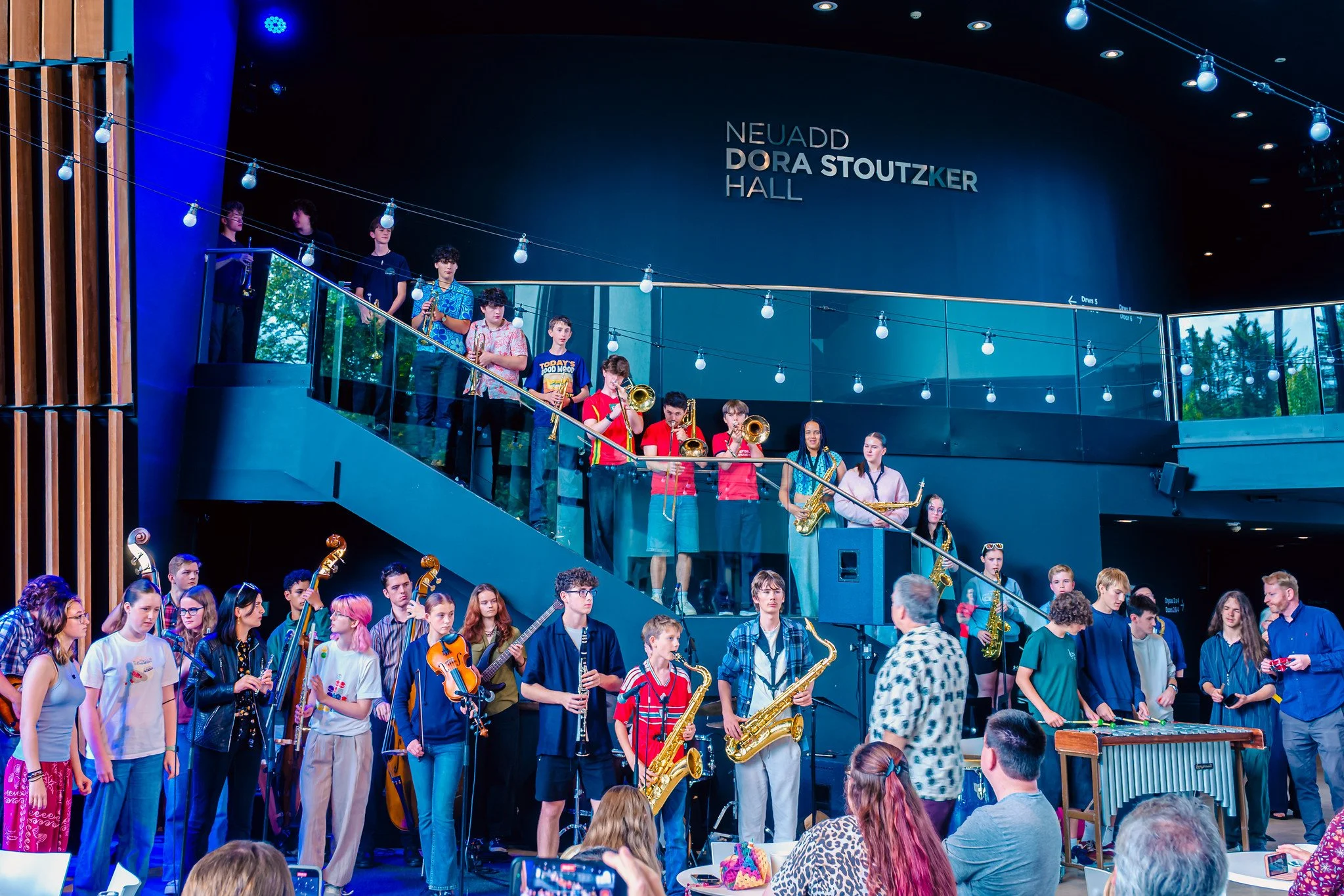
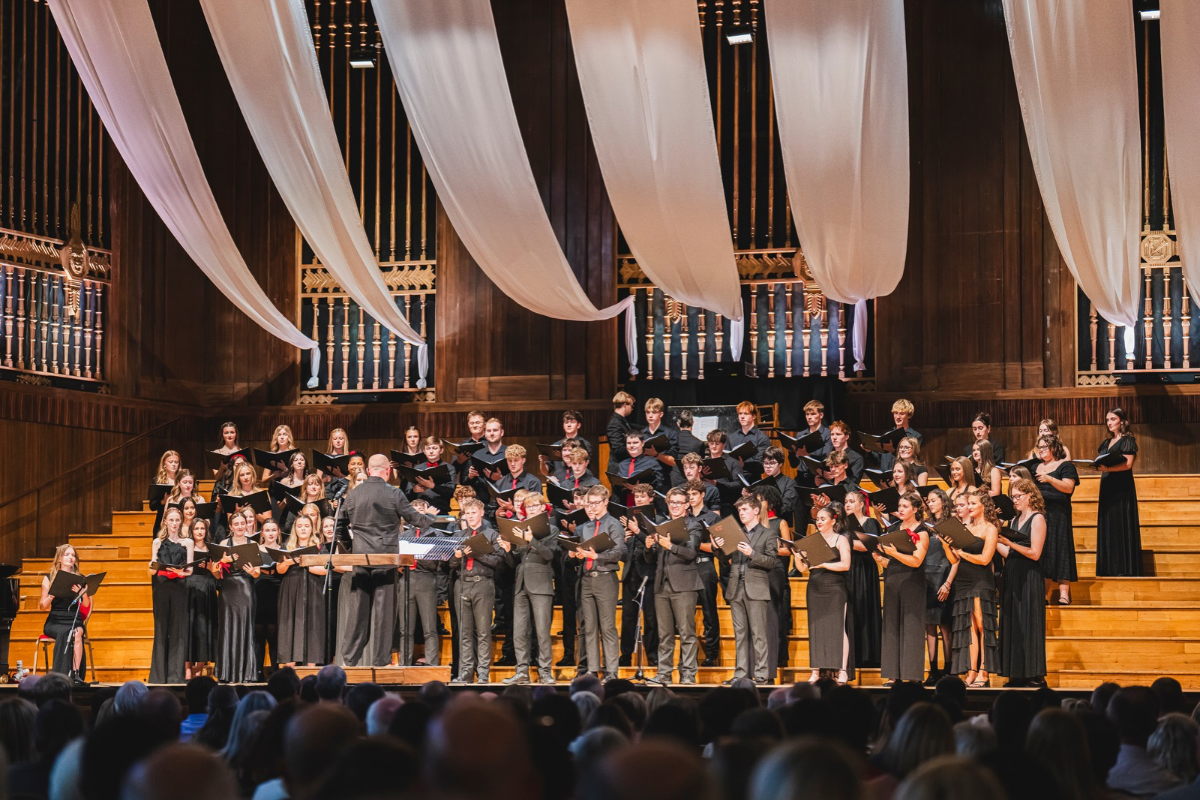
Each year, hundreds of young people from every local authority in Wales join the National Youth Orchestra, Choir, Brass Band, Theatre and Dance ensembles. They rehearse at intensity, perform on professional stages (this summer in Bangor, St Asaph, St Davids, Swansea and Newport) and go home with lasting friendships. Programmes such as Momentwm are extending that offer locally, with free weekly dance sessions across Gwynedd, Conwy and Ynys Môn. We also deliver a range of pathways programmes, such as Cor Skills, Strings Attached, Folk and Jazz Discovery Days.
Access is part of the mental health work. This year, 61% of our ensemble members — 166 of 272 young people — received bursary support. Ninety-five received a full bursary. Cost should never be the reason a young person misses the room in which they feel they belong.
The arts are not a luxury. For many young people they are a lifeline: a source of confidence, a place to belong, and a way of being heard before crisis hits.
Investing in Future Generations
Young people in Wales are already telling us what helps: being with peers who want the same things; working with adults who expect them to be capable; and having somewhere regular to go that is not a clinic and not a classroom.
That is not a substitute for CAMHS, counselling or the NEST/NYTH whole-system approach. It is part of the same picture. If creativity is a protective factor, then youth arts are public health infrastructure. The economic evidence now matches what young people have been telling us for years. They should be funded, planned and measured as such - across Education, Culture and Health - because prevention is cheaper, kinder and more effective than crisis.
On this World Mental Health Day, we will keep advocating for the importance of youth arts. Every young person in Wales deserves the chance to create, connect and flourish.
Evan Dawson, CEO, National Youth Arts Wales